Skip to content

Our mission is to amplify fellow entrepreneurs by building lasting value using real technology and lateral thinking.

Our Story

Est. 2017

Rekall was founded by a technology and product team who began collaborating in the bustling tech scene of Tokyo in 2007.

After building and exiting several startups, they reunited in 2017, bringing deep experience in AI and data-driven platforms.

Kirk McMurray (left) and Dominiek Ter Heide (right), co-founders of Rekall

Kirk McMurray (left) and Dominiek Ter Heide (right), co-founders of Rekall

The AI Shift

We started as a machine-learning company. We saw that AI marks a major shift in technology, but the real challenge lies in combining domain expertise with data-driven automation. This led us to partner with fellow founders to accelerate their businesses.

We specialize in entering new verticals and developing scalable products

Our Partnerships

Over the years we’ve launched more than a dozen products, generating millions in revenue and exit value for our partners.

Our mission is to bring high-quality digital products to market swiftly, driving business success for the people we work with.
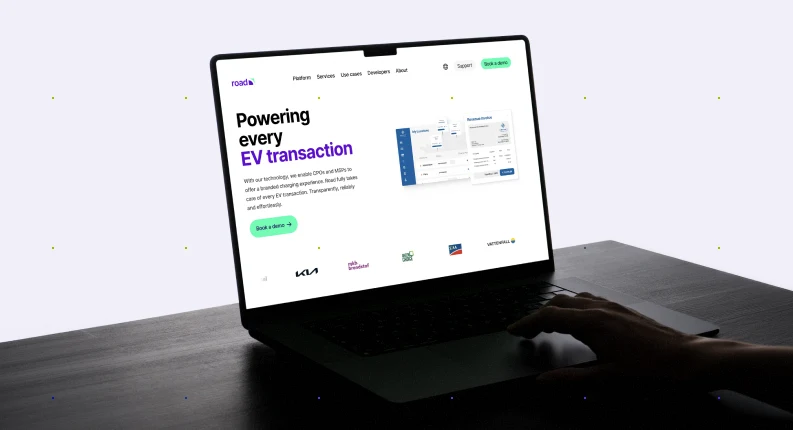
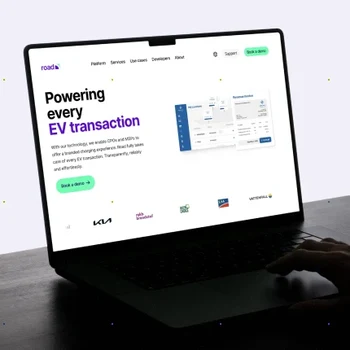
Road.io — Powering every EV transaction

Our Beliefs

Our mission: build lasting value
Lasting value means improving mankind through integrity and ethics, by solving hard problems with long-term stewardship.
1/5

FAQ

How long does it take to build a product?
It depends on the starting point. A first version real users can touch is usually a matter of weeks; a business that's found its footing is measured in one to a few years. We compress timelines with AI-amplified building and a small, senior team — and we deliberately stagger work so architecture, product and domain thinking get the bandwidth they need rather than chasing a fixed date.
Do you help with go-to-market, or just the build?
Both. We join as entrepreneurs, not vendors, so we're involved in technology strategy, product design, fundraising and M&A alongside the build. The build is necessary but rarely sufficient — getting to market is part of the work.
Do you take equity, charge fees, or both?
Usually both. We need enough cash to cover the real costs of the first year, and enough equity to be genuine long-term partners with skin in the game. The exact mix is set per partnership and reflects the stage and the upside we can create together.
How much does a typical project cost?
There's no list price — it's a partnership, not a statement of work. Cost depends on scope, stage and the cash-versus-equity mix we agree on. The first thing we look for is whether there's enough capital to fund a realistic first twelve months; if there is, we shape the terms around the opportunity.
Who will work on the project?
A small band of proven, staff-level builders — the same people who've taken products to market and scaled them. No career consultants, no talent arbitrage, no hourly theater. Generative AI lets a handful of senior people do what used to take a department, and that's how we prefer to work.
What kind of investments do you make?
We invest our time, our team and — where it fits — our capital, taking an ownership stake so our incentives match yours over multiple years. We're selective: we're after a handful of mission-aligned partnerships we won't regret, not a large portfolio.
How do you choose what projects to accept?
We say no to most things. We weigh opportunities across people, purpose, partnership, potential and portfolio — the integrity and talent of the partners, alignment with our mission, whether they uniquely need what we do, a credible path to product-market fit, and whether we have the bandwidth to do it justice. If we can't be genuinely useful, we pass.
What verticals do you specialize in?
We're generalists by design — most of the innovation we care about comes from synthesis across domains rather than hyperspecialization. We've gone deep in EV infrastructure, veterinary and human health, education, fitness and entertainment. What matters more than the vertical is real technology applied with substance.

Our mission is to
amplify fellow
entrepreneurs by
building lasting value
using real technology
and lateral thinking.

Our Story

Est. 2017

Rekall was founded by a technology
and product team who began
collaborating in the bustling tech
scene of Tokyo in 2007.

After building and exiting several
startups, they reunited in 2017,
bringing deep experience in AI and
data-driven platforms.

Kirk McMurray and Dominiek Ter Heide, co-founders of Rekall

Kirk McMurray (left) and Dominiek Ter Heide (right),
co-founders of Rekall

The AI Shift

We started as a machine-learning
company. We saw that AI marks a major
shift in technology, but the real challenge
is combining domain expertise with
data-driven automation. That’s what led
us to partner with fellow founders to
accelerate their businesses.

We specialize in
entering new verticals
and developing
scalable products

Our PartnershipsRoad.io — Powering every EV transaction

Over the years we’ve launched more than
a dozen products, generating millions in
revenue and exit value for our partners.

Our mission is to bring high-quality digital
products to market swiftly, driving business
success for the people we work with.

Our Beliefs
Our mission: build lasting value
Lasting value means improving mankind through integrity and ethics, by solving hard problems with long-term stewardship.
1/5

FAQ

How long does it take to build a product?
It depends on the starting point. A first version real users can touch is usually a matter of weeks; a business that's found its footing is measured in one to a few years. We compress timelines with AI-amplified building and a small, senior team — and we deliberately stagger work so architecture, product and domain thinking get the bandwidth they need rather than chasing a fixed date.
Do you help with go-to-market, or just the build?
Both. We join as entrepreneurs, not vendors, so we're involved in technology strategy, product design, fundraising and M&A alongside the build. The build is necessary but rarely sufficient — getting to market is part of the work.
Do you take equity, charge fees, or both?
Usually both. We need enough cash to cover the real costs of the first year, and enough equity to be genuine long-term partners with skin in the game. The exact mix is set per partnership and reflects the stage and the upside we can create together.
How much does a typical project cost?
There's no list price — it's a partnership, not a statement of work. Cost depends on scope, stage and the cash-versus-equity mix we agree on. The first thing we look for is whether there's enough capital to fund a realistic first twelve months; if there is, we shape the terms around the opportunity.
Who will work on the project?
A small band of proven, staff-level builders — the same people who've taken products to market and scaled them. No career consultants, no talent arbitrage, no hourly theater. Generative AI lets a handful of senior people do what used to take a department, and that's how we prefer to work.
What kind of investments do you make?
We invest our time, our team and — where it fits — our capital, taking an ownership stake so our incentives match yours over multiple years. We're selective: we're after a handful of mission-aligned partnerships we won't regret, not a large portfolio.
How do you choose what projects to accept?
We say no to most things. We weigh opportunities across people, purpose, partnership, potential and portfolio — the integrity and talent of the partners, alignment with our mission, whether they uniquely need what we do, a credible path to product-market fit, and whether we have the bandwidth to do it justice. If we can't be genuinely useful, we pass.
What verticals do you specialize in?
We're generalists by design — most of the innovation we care about comes from synthesis across domains rather than hyperspecialization. We've gone deep in EV infrastructure, veterinary and human health, education, fitness and entertainment. What matters more than the vertical is real technology applied with substance.
Rekall